

 |
 |
 |
LINKS TO FAVORITE WEBSITES
|
|
|
|||
|
|
|
|||
|
|
|
ROHAN'S DREAM CAR PAGE!!


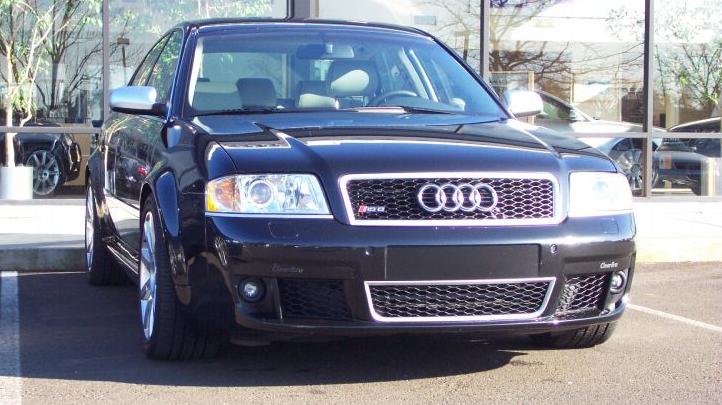
The Audi RS6 was a high-performance version of Audi's 2nd generation (1998-2005) A6, and was available as both a sedan and a wagon (called Avant by Audi).
The RS6 featured a twin-turbocharged version of the corporate 4.2 Litre V8 engine, which had originally been developed for the 1994 A8. With the aid of the turbochargers, output rose to 444 hp (331 kW) and 415 ft·lbf (560 Nm) of torque. The combination of the V-8 and the turbochargers helped give the RS6 an exceptionally wide powerband, with peak torque available from 1950 to 5600 RPMs.
The RS6 featured a twin-turbocharged version of the corporate 4.2 Litre V8 engine, which had originally been developed for the 1994 A8. With the aid of the turbochargers, output rose to 444 hp (331 kW) and 415 ft·lbf (560 Nm) of torque. The combination of the V-8 and the turbochargers helped give the RS6 an exceptionally wide powerband, with peak torque available from 1950 to 5600 RPMs.
Audi RS6
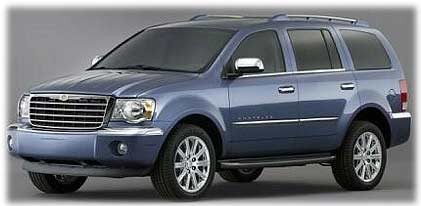
The 2007 Chrysler Aspen is more fuel-efficient and maneuverable than many full-sized SUVs, yet it features more interior passenger space and cargo room, not to mention unmatched towing and hauling capability.
With a choice of two V-8 engines, including the 5.7-liter HEMI® with the fuel-saving Multi-displacement System (MDS), Chrysler Aspen provides best-in-class power and torque, while two four wheel drive systems are available (rear drive is standard).
The 2007 Chrysler Aspen offers premium features including interior LED lighting, express-up windows, a full-screen navigation radio, heated first- and second-row seats, and a rear-seat DVD entertainment system. A new one-touch lane-change feature allows the driver to quickly activate a three-blink turn signal when changing lanes. Advanced safety and security features include Electronic Stability Program (ESP), Electronic Roll Mitigation (ERM), ParkSense™, Tire Pressure Monitoring (TPM) system and side-curtain air bags for all three rows.
With a choice of two V-8 engines, including the 5.7-liter HEMI® with the fuel-saving Multi-displacement System (MDS), Chrysler Aspen provides best-in-class power and torque, while two four wheel drive systems are available (rear drive is standard).
The 2007 Chrysler Aspen offers premium features including interior LED lighting, express-up windows, a full-screen navigation radio, heated first- and second-row seats, and a rear-seat DVD entertainment system. A new one-touch lane-change feature allows the driver to quickly activate a three-blink turn signal when changing lanes. Advanced safety and security features include Electronic Stability Program (ESP), Electronic Roll Mitigation (ERM), ParkSense™, Tire Pressure Monitoring (TPM) system and side-curtain air bags for all three rows.
CHRYSLER ASPEN

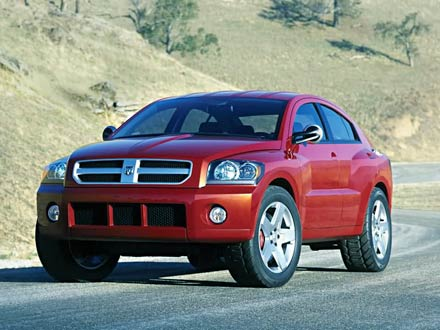
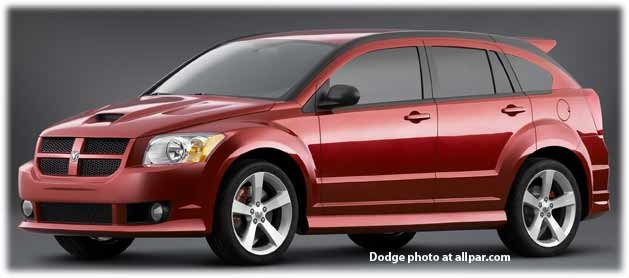
The 2007 Dodge Caliber SRT4 is capable of a 0-60 mph time in less than six seconds.
The 2007 Dodge Caliber is powered by a “World Engine” produced at the Global Engine Manufacturing Alliance (GEMA) facility in Dundee, Mich. “The 2.4-liter turbocharged World Engine delivers a level of power you’d expect from a V-8,” said Pete Gladysz, Senior Manager – Powertrain, SRT. “With the engine in the 2007 Dodge Caliber SRT4, we were able to take advantage of tried-and-true performance improvements, such as increased cylinder-head flow and higher compression ratio, as well as newer technologies such as Variable Valve Timing (VVT).” (The 4.7 V8, even in High Output form, produces less power.)
The aluminum 2.4-liter World Engine block is specially machined for increased water and oil flow. Unique cast pistons travel within iron cylinder liners, and are cooled by oil squirters and affixed to forged connecting rods for high-revving reliability.
The 2007 Dodge Caliber is powered by a “World Engine” produced at the Global Engine Manufacturing Alliance (GEMA) facility in Dundee, Mich. “The 2.4-liter turbocharged World Engine delivers a level of power you’d expect from a V-8,” said Pete Gladysz, Senior Manager – Powertrain, SRT. “With the engine in the 2007 Dodge Caliber SRT4, we were able to take advantage of tried-and-true performance improvements, such as increased cylinder-head flow and higher compression ratio, as well as newer technologies such as Variable Valve Timing (VVT).” (The 4.7 V8, even in High Output form, produces less power.)
The aluminum 2.4-liter World Engine block is specially machined for increased water and oil flow. Unique cast pistons travel within iron cylinder liners, and are cooled by oil squirters and affixed to forged connecting rods for high-revving reliability.
Dodge Caliber
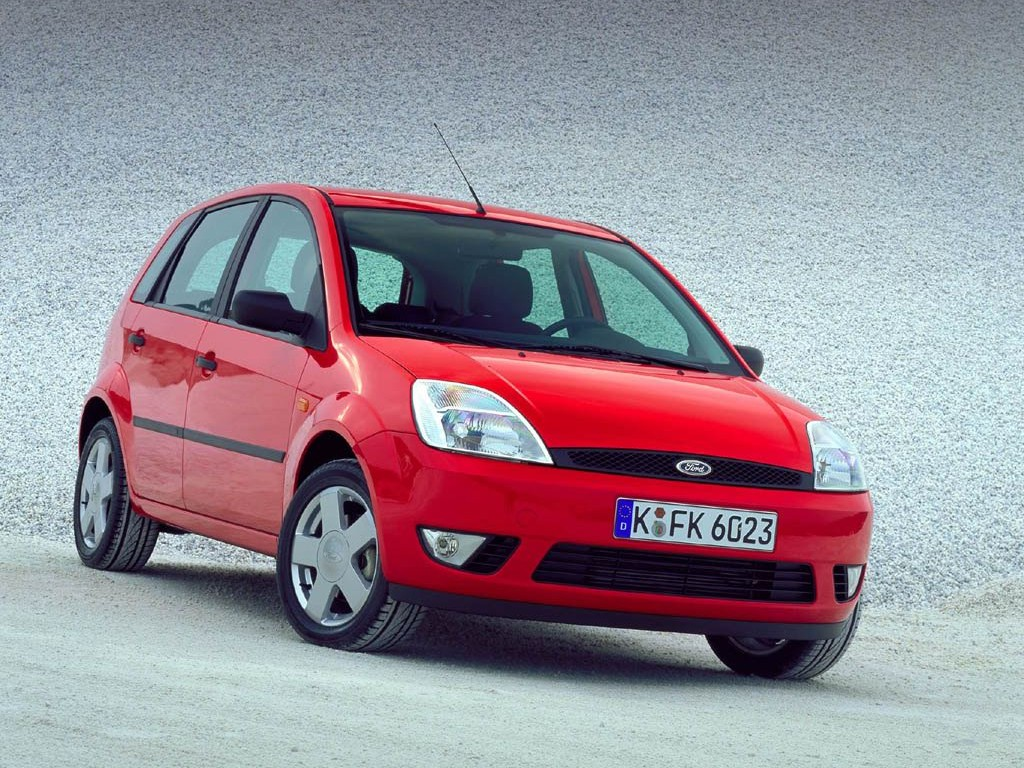
In the early 1970s, demand from consumers for small cars was rising, as Ford's competitors were launching cars like the Fiat 127 </wiki/Fiat_127> and the Renault 5 </wiki/Renault_5>. The effects of the 1973 energy crisis </wiki/1973_energy_crisis> was also affecting demand. Ford needed a small car to compete in this emerging market. After research and many mock-ups, a prototype and project known as "Bobcat" was created, which would be the basis of Ford's new car, the "Fiesta". After years of speculation by the motor press about Ford's new car, it was unveiled in late 1975.
Birth of the Fiesta
The Fiesta Mark I was launched in 1976. It was also a breakthrough for Ford as it was their first truly successful front wheel drive </wiki/Front_wheel_drive> car. It was also the first new Ford car since the Ford Granada </wiki/Ford_Granada> five years earlier. The first generation Fiesta was also a "world car", an "Americanised" version being sold in the United States </wiki/United_States> from 1978 to 1980 where it was classified as a subcompact car </wiki/Subcompact_car>. The Fiesta's small size prompted American management to invest in what would become the European Mk III Escort </wiki/Ford_Escort_%28European%29> introduced in 1980, and the first generation American Escort </wiki/Ford_Escort_%28North_American%29>, introduced in 1981. Mechanically, the Fiesta followed tradition, with an end-on four-speed manual transmission </wiki/Manual_transmission> mounted to a new version of the Ford Kent </wiki/Ford_Kent> OHV </wiki/OHV> engine dubbed "Valencia", named after the brand new Spanish </wiki/Spain> factory in Almusafes </w/index.php?title=Almusafes&action=edit>, Valencia </wiki/Valencia>, developed especially to produce the new car. Ford's plants in Dagenham </wiki/Dagenham>, England </wiki/England> and Cologne </wiki/Cologne>, Germany </wiki/Germany> were also used to manufacture Fiestas.
The Fiesta was a runaway success overnight, and the one millionth Fiesta was produced on January 9 </wiki/January_9>, 1979 </wiki/1979>. The car was available with 957 cc (high compression and low compression options), 1.1 and 1.3 L OHV petrol engines and in base, Popular, L, Ghia and S trim, as well as a van </wiki/Van>. A sporting derivative (1.3 Supersport) was offered in 1980, effectively to test the market for the similar XR2 introduced one year later, which featured a 1.6 L version of the same engine. Black plastic trim was added on the exterior and interior, and the car looked exciting. The small square headlights were replaced with larger circular ones resulting in the front indicators being moved into the bumper to accomodate the change. In a stroke, Ford had created a cult car so beloved of boy racers </wiki/Boy_racer> throughout the 1980s. But with a four-speed transmission and just 84 bhp initially, the performance of the early XR2 hot hatch </wiki/Hot_hatch> was disappointing compared with later rivals.
Mark 1 specifications:
Capacity: 957–1598 cmł
Power: 40–84 cc
Max. speed: 131–167 km/h
Acceleration 0–100 km/h: 20.3–10.4 seconds
Cited from http://en.wikipedia.org/wiki/Ford_Fiesta
Birth of the Fiesta
The Fiesta Mark I was launched in 1976. It was also a breakthrough for Ford as it was their first truly successful front wheel drive </wiki/Front_wheel_drive> car. It was also the first new Ford car since the Ford Granada </wiki/Ford_Granada> five years earlier. The first generation Fiesta was also a "world car", an "Americanised" version being sold in the United States </wiki/United_States> from 1978 to 1980 where it was classified as a subcompact car </wiki/Subcompact_car>. The Fiesta's small size prompted American management to invest in what would become the European Mk III Escort </wiki/Ford_Escort_%28European%29> introduced in 1980, and the first generation American Escort </wiki/Ford_Escort_%28North_American%29>, introduced in 1981. Mechanically, the Fiesta followed tradition, with an end-on four-speed manual transmission </wiki/Manual_transmission> mounted to a new version of the Ford Kent </wiki/Ford_Kent> OHV </wiki/OHV> engine dubbed "Valencia", named after the brand new Spanish </wiki/Spain> factory in Almusafes </w/index.php?title=Almusafes&action=edit>, Valencia </wiki/Valencia>, developed especially to produce the new car. Ford's plants in Dagenham </wiki/Dagenham>, England </wiki/England> and Cologne </wiki/Cologne>, Germany </wiki/Germany> were also used to manufacture Fiestas.
The Fiesta was a runaway success overnight, and the one millionth Fiesta was produced on January 9 </wiki/January_9>, 1979 </wiki/1979>. The car was available with 957 cc (high compression and low compression options), 1.1 and 1.3 L OHV petrol engines and in base, Popular, L, Ghia and S trim, as well as a van </wiki/Van>. A sporting derivative (1.3 Supersport) was offered in 1980, effectively to test the market for the similar XR2 introduced one year later, which featured a 1.6 L version of the same engine. Black plastic trim was added on the exterior and interior, and the car looked exciting. The small square headlights were replaced with larger circular ones resulting in the front indicators being moved into the bumper to accomodate the change. In a stroke, Ford had created a cult car so beloved of boy racers </wiki/Boy_racer> throughout the 1980s. But with a four-speed transmission and just 84 bhp initially, the performance of the early XR2 hot hatch </wiki/Hot_hatch> was disappointing compared with later rivals.
Mark 1 specifications:
Capacity: 957–1598 cmł
Power: 40–84 cc
Max. speed: 131–167 km/h
Acceleration 0–100 km/h: 20.3–10.4 seconds
Cited from http://en.wikipedia.org/wiki/Ford_Fiesta
FORD FIESTA

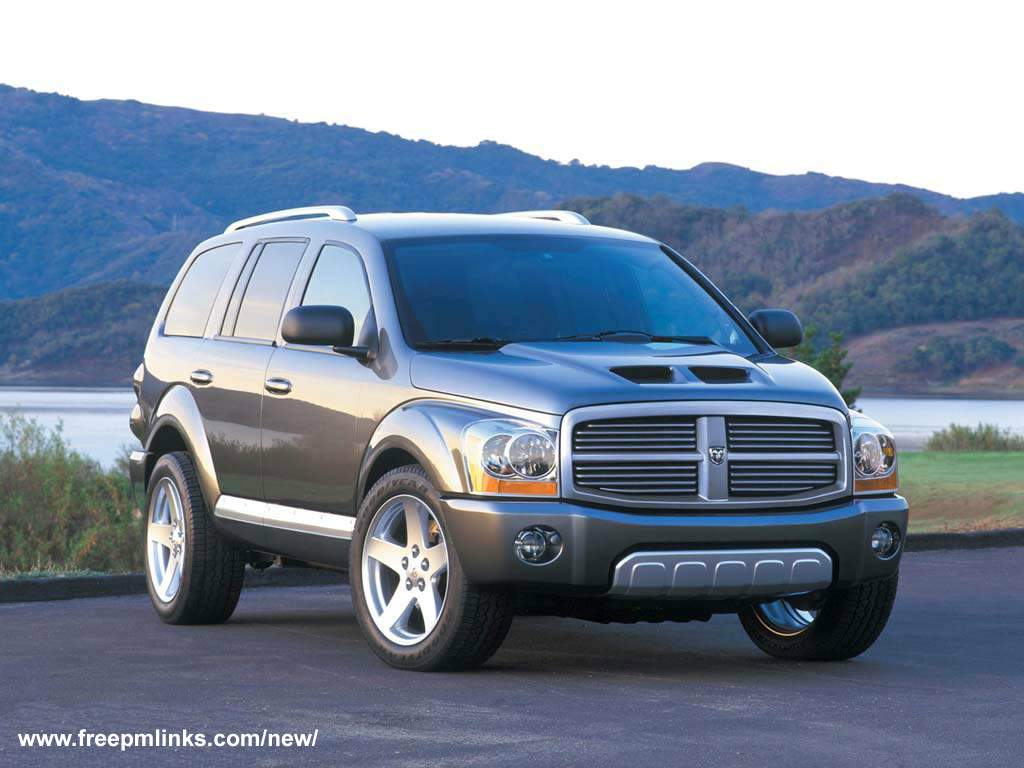
The world is getting smaller, and it has nothing to do with technology. Bigger than most of its full-size competition, Durango maneuvers and drives like a smaller SUV, yet provides all the space you need for comfortable trips with family, friends, and gear. To get a really smooth ride out of most vehicles you need to pay more to get a better suspension system. With Durango, the smooth ride comes standard. That's because every Durango features a long wheelbase and wide track, a coil-sprung solid-axle rear suspension with a Watt's linkage to control lateral motion, rack-and-pinion steering, torsion bar independent front suspension, and a hydroformed box-section frame for added stiffness. You can pack plenty inside Durango's 102.4 cubic feet of cargo volume and up to 1,750 pounds of payload. Want more? The optional HEMI engine gives you best-in-class 8,850 pounds* of towing capability. Or opt for one of two other powerful engines: 3.7-liter V6 with 3,700 pounds maximum towing capacity 4.7-liter V8 with 7,400 pounds maximum towing capacity* * When properly equipped. Based on Automotive News classification.
Two available all-wheel-drive (AWD) electronic shift transfer cases—single speed and two speed—are engaged at all times and controlled by a switch on the instrument panel. Both provide traditional part-time four-wheel drive for maximum traction on slippery surfaces. Best of all, standard full-time AWD "set-it-and-forget-it" is always there when you need it.
Cited from http://www.dodge.com/durango
Two available all-wheel-drive (AWD) electronic shift transfer cases—single speed and two speed—are engaged at all times and controlled by a switch on the instrument panel. Both provide traditional part-time four-wheel drive for maximum traction on slippery surfaces. Best of all, standard full-time AWD "set-it-and-forget-it" is always there when you need it.
Cited from http://www.dodge.com/durango
DODGE DURANGO
 |
 |
 |
 |
 |
 |
 |
 |
 |
 |
 |
 |
Links to my friend's pages